
Jean-Félix Durastanti, professeur à l’UPEC et expert en énergétique et génie des procédés vient d’être élu président de L’Académie européenne interdisciplinaire de sciences (AEIS).
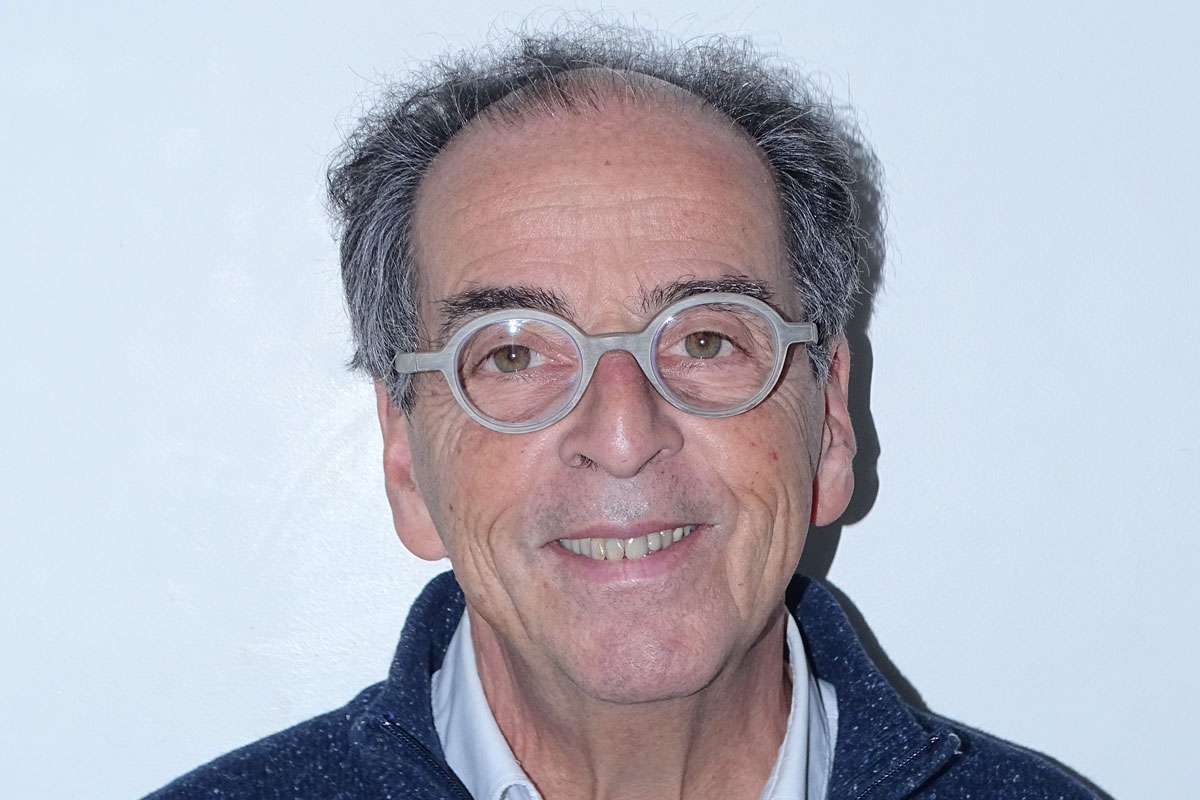
L’AEIS est une société savante d’intérêt général ayant pour objectifs de rassembler et de faire étudier les différentes recherches et pensées scientifiques dans un cadre interdisciplinaire, d’établir entre les scientifiques un langage commun nécessaire pour une mutuelle compréhension, de faire connaître les plus récentes découvertes, inventions ou réalisations des domaines de la connaissance et de participer à l’élargissement de la pensée, en particulier sur des sujets frontières des différentes disciplines. Le dernier colloque international s’est tenu, les 15 et 16 janvier 2026 et a traité de « Interdisciplinarité, Instrumentation, Expérimentation et Simulation » : pas de science sans théories, expériences et instruments scientifiques.
Nommé en 1997 professeur à l’UPEC, sur le campus universitaire de Sénart, Jean-Felix Durastanti a contribué à la structuration de la filière maintenance et risques industriels en dirigeant le Master MMRI (Maintenance et Maîtrise des Risques Industriels) et le Département Génie Industriel et Maintenance (IUT de Sénart), en ayant été responsable de la licence Maintenance des Systèmes Pluri techniques (UPEC) et président du Comité Scientifique de l’IUT de Sénart-Fontainebleau. En 2017, Il devient Directeur de l’École Publique d’Ingénieurs en Santé et Numérique (EPISEN). Il a également été directeur adjoint du Centre d’Études et de Recherche en Thermique Environnement et Systèmes (CERTES) de 2015 à 2025.
Masterclasses
Hybrid AI Approaches Combining Model-Based and Data-Driven Methods for Enhanced Fault Diagnosis in Energy Systems
From January 12, 2026 to January 23, 2026
Invited Professor
Dr. Majdi Mansouri, Associate Professor (HDR), Sultan Qaboos University, Oman
Majdi Mansouri (Senior Member, IEEE) is an Associate Professor in Electrical and Computer Engineering at Sultan Qaboos University, Oman. He received his Ph.D. in Electrical Engineering from the University of Technology of Troyes, France, and the H.D.R. (Habilitation) in Computer Engineering from the University of Orléans, France. He has authored more than 300 peer‑reviewed publications and is the first author of two books:
- Data‑Driven and Model‑Based Methods for Fault Detection and Diagnosis (Elsevier, 2020)
- Intelligent Fault Detection and Diagnosis Techniques for Monitoring Wind and Solar Energy Systems (Elsevier, 2025)
His research focuses on model‑based, data‑driven, and AI‑based fault detection and diagnosis (FDD), with particular emphasis on hybrid approaches and applications in renewable energy and safety‑critical engineering systems.
During Dr. Mansouri’s stay, a 30-hour intensive masterclass program will be delivered over two weeks. The lectures will be addressed primarily to CERTES laboratory Ph.D. students and researchers and will also be open to Master students of UPEC (Master INTEREE – FST). The course is additionally accessible to UPEC doctoral and master students interested in artificial intelligence, data analysis, and energy systems.
Content of the Masterclasses
- Introduction to Intelligent Fault Detection and Diagnosis (FDD)
- Role of FDD in safety‑critical and energy systems
- Overview of model‑based, data‑driven, and hybrid approaches
- Model‑Based Fault Diagnosis (MBFD)
- Analytical redundancy and residual generation
- Strengths, limitations, and interpretability issues
- Data‑Driven Fault Diagnosis (DDFD)
- Machine learning foundations for FDD
- Learning nonlinear behaviors from operational data
- Data Preprocessing for FDD Models
- Data cleaning, normalization, and handling missing data
- Dealing with nonstationarity and varying operating conditions
- Feature Extraction and Selection in FDD
- Statistical, signal‑based, and data‑driven features
- Dimensionality reduction and relevance analysis
- Enhanced Machine Learning for FDD
- Classical ML and deep learning algorithms
- Physics‑guided and hybrid learning strategies
- Hybrid FDD Frameworks
- Combining MBFD and DDFD
- Digital twins and physics‑informed neural networks
- Evaluation Metrics and Model Selection
- Performance assessment and benchmarking
- Robustness, generalization, and sample efficiency
- Advanced Decision‑Making Techniques in FDD
- Fault isolation and diagnosis reasoning
- Adaptive and real‑time decision systems
- Explainable AI and Model Interpretability
- Transparency and trust in AI‑based diagnosis
- Interpretable hybrid models for industrial use
- Optimizing FDD for Real‑Time Applications
- Online learning and adaptive diagnosis
- Computational constraints and deployment issues
- Advanced Topics: Anomaly Prediction and Maintenance
- Anomalies detection and diagnosis
- Predictive maintenance strategies
- Integrating FDD into Renewable Energy Systems
- Wind and solar energy case studies
- Challenges and future research directions
Expected Outcomes
By the end of the masterclass, participants will:
- Understand the theoretical foundations of MBFD, DDFD, and hybrid FDD methods
- Be able to design and evaluate intelligent FDD systems
- Gain hands‑on insights into AI‑driven diagnosis for renewable energy applications
- Be prepared to conduct research on scalable, explainable, and industry‑ready FDD solutions
For any further information, please contact the TRAINING COORDINATORS:
Mustapha KARKRI, CERTES, IUTCV-UPEC
Mahamadou ABDOU TANKARI, CERTES, IUTCV-UPEC